Year End Music Wrap Up for 2011

Bon IverNow I know this is a vanity post so feel free to ignore.  With that in mind, here’s a few Top lists for 2011:

Best Rock & Popular Music

  1. Bon Iver [st]
  2. James Blake [st]
  3. My Brightest Diamond All Things Will Unwind
  4. Florence & The Machine Ceremonials
  5. St. Vincent Strange Mercy
  6. Bjork Biophillia
  7. Radiohead King of Limbs
  8. Explosions In the Sky Take Care, Take Care, Take Care
  9. Tom Waits Bad As Me
  10. ††† EP †

Best Jazz

  1. Endangered Blood [st]
  2. Kneebody You Can Have Your Moment …ok, so this was late 2010
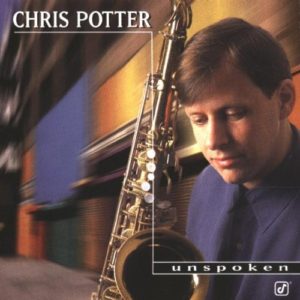
  3. Chris Potter Transatlantic
  4. Jerry Bergonzi Convergence …more sage sounds from the i Ching master
  5. Trombone Shorty For True
  6. Ambrose Akinmusire Far But Few Between
  7. David Binney Barefooted Town
  8. James Farm [st]
  9. Joe Lovano Bird Songs
  10. John Scofield 54

Best “New to Me” Albums

…aka albums I didn’t get to or was just hipped to this last year…

  1. Iron & Wine The Shepherd’s Dog
  2. Pulp Different Class
  3. Kayne West My Dark Twisted Fantasy
  4. Elvis Costello …early catalog releases I found on a Best Of…
  5. Sleigh Bells Treats

Ok…your turn!

Posted in Music, News | 1 Comment

Lester Young Plays “Lester Leaps In”

The History Of Jazz, vol. 3: The Swing EraBob Brookmeyer hipped me to Lester Young. A few lessons into my studies with Bob, he pointed out that my improvised lines were chordal, jumpy and relatively undeveloped – another way of saying vertical and disconnected. He prescribed a steady diet of Lester Young as an antidote, serving up tracks like “Shoe Shine Boy,” “Taxi War Dance,” and “Lester Leaps In.” Within two weeks of the daily Lester sessions, I found a sweeter sound, a straighter 8th feel and less obsession with harmonic “tricks” over strong melodies. I found myself concentrating more on the larger harmonic areas of the tune and less chord to chord. Bob noticed the difference at the very next lesson. “You took my advice,” he said with a hint of a smile. Yes Bob, I did. And I haven’t stopped since.

“Lester Leaps In” is a Count Basie head arrangement over rhythm changes designed to feature Young over tons of blowing space. There are several versions floating around, featuring Pres (Billy Holiday’s nickname for Young) doing his thing at high speed – lots of bluesy lines, simple chromatic movements around the I-chord, and lots of lyrical ideas, delivered with immaculate groove and his sonorous tone.

This transcription is from 1939 with Count Basie’s band, The Kansas City Seven.

A little analysis

Lester’s style is nearly always “horizontal,” sounding the bigger key-areas of a tune rather than each chord. This was a big contrast to the other great tenor man of the time, Coleman Hawkins. Lester would take elaborate progressions like I vi ii V, which would lead to Hawk unleashing a flurry of notes, and instead see the whole thing as being in the key of I and simply play off the key center. That meant less cliches, more time to work, and a less busy style. Not having to worry about rapidly moving chords means time to emphasize subtle key center colors and the Blues.

Horizontal style, demonstrated by Lester Young

Notice letter (B)? Its just an ornamented I chord, even though there’s a lot of chords in the same space. But what a hip, rhythmically swinging idea! And Basie’s comping shows this sensibility too. He’s barely playing anything back there, but the bass is really going at it.

This is not to say Pres didn’t have moments of harmonic surprise and detail. He is a jazz musician, right? But since his horizontal orientation to the chords doesn’t worry about each change, he reacts to the key centers instead of each change in sound. Check out this moment from the trading-4s section as an example:

Lester Young going chromatic

Another great moment like this is the twisting line in chorus (B) measures 73 to 76.

Some practice thoughts

Playing horizontally in a hip manner requires a lot of intuition and a great musical ear. You have to develop a sensitivity for key regions and be adept at melodic development, as harmony will be less of a crutch. Here’s a few suggestions to get you started:

  • Identify key areas of a tune…think big picture. “Tune Up,” for example, is just a bunch of ii-V-Is…there’s only 3 keys to deal with in the whole tune.
  • Play ideas that center around the key rather than the chords. This doesn’t mean you have to discard all of those cool guide tones and enclosures and the like. You’re just orienting them around the bigger picture.
  • Now that you have more space to play off of, use it. Leave rests in interesting places. Space is a great ally in developing pacing and helping the audience find organization and phrasing in your ideas.
  • And possibly most important, transcribe lots of horizontal players like Pres, Bix Beiderbecke, Miles Davis and Bill Frisell!

Good luck and happy shedding!

Posted in Jazz, Practicing, Transcription | 1 Comment

Oct 14th Summary

Today we finished our note-taking section by looking at SQ3R, a structured method for retaining more from reading informational texts.

Homework

Finish the SQ3R worksheet by writing a review into the Review section of the worksheet, and then write a reflection of the technique either at the bottom in the white space or on another sheet of paper.

Posted in Uncategorized | Leave a comment

To Spotify’s Development Team:

First, let me say that I love Spotify for the most part. It’s a wonderful way to find new music, and having the huge library has been great for a music junkie like myself. And I’m a Facebook user as well so I don’t (for the most part) mind the integration Spotify has done with Facebook. But what I see is a problem and a bad paradigm for internet companies that’s starting to take shape.

The Key Difference Between Spotify & Facebook’s Social Features

Facebook is free.

I pay for a Premium Spotify account.

I feel awkward at best that the Spotify app in Facebook is requiring me to share what I’m listening to in the program.

On Facebook, I don’t share what I don’t want to share, but accept that there will be occasional things I have to go “fix” or delete due to some hole I didn’t realize I was falling into when I signed up for a service that shamelessly admits that people are its real product. Thats the side effect of using a free service that makes its money by selling us to advertisers.

On Spotify, I’ve chosen to pay for the service. The mobile app makes it worth my time and money…not the social features. If you’re making too little profit, charge more. If I feel its worth it, I’ll subscribe. If not, I’ll leave. Its not personal…just business.

And that should be ok.

What I’m not doing, is paying you to share my information. I’ll do that myself when I want. I will control what I share. Simple. If you prevent that, I will leave. Simple.

And for the users with the free service? Well…they’re getting something for free. I think tradeoffs are to be expected.

An Unfortunate Trend

Facebook has made a fortune selling us. And for the most part, we’re complicit. Maybe a lot of users are naive about privacy, but I think most of us are just looking at information differently these days. I bet if people were as up in arms about internet privacy as we like to claim (while turning blue and blowing smoke out of our ears), we’d all burn Mark Zuckerburg at the stake. Instead, I dutifully log onto Facebook daily…voting with every click.

Maybe I’m a sucker. More likely, I’m just realistic about the tradeoffs involved.

The trend in question is that companies, in their efforts to be relevant and massively rich on the internet, are viewing us through this same lens. We are apparently the commodity now. And yet some offer services that are wonderful without social aspects. Integrating those sorts of things can be very fun when desired, but are secondary (or even more removed) from the point of the whole experience.

I don’t buy a TV for the discussions about it I might get into when company comes over. I could care less what my friends think about it. Does it look good when I play my shows?

You want word-of-mouth advertising for your product? Make sure I like it and I’m happy to oblige. Forcing people to share for you just robs the user of any authenticity they might have had. Suddenly, a freely offered bit of praise becomes one more nagging ad in all the other noise out there.

Closing Thoughts

So Spotify, make sure you think carefully about what your company is recognized for selling. For now, my shameless evangelizing of your product to friends, colleagues and the 300+ students I interact with every semester has to stop. I’m just not sure what I’m telling people about anymore. Is this a music service, or Facebook’s new social music experiment? Until I know, my voice will be much more subdued.

Good luck Spotify. Hopefully this doesn’t fall on deaf ears.

Posted in Music, News | Leave a comment

Phil Woods plays “Goin’ to Chicago Blues”

Oliver Nelson's More Blues and the Abstract TruthIt’s my birthday today, but you get the present! Here’s a Phil Woods transcription from Oliver Nelson’s More Blues and the Abstract Truth.

Phil Woods is possibly the greatest living bebop saxophonist, and the definitive disciple of Charlie Parker in my book. He has the licks no doubt, but what really matters is that his sense of phrasing is so elastic and deeply informed by the blues.

Many players, in an effort to embed bebop into their psyche, run countless patterns and drills ultimately sounding like a band-in-the-box solo. They’re missing that Bird was so loose and more than a little abstract in his sounding of the changes. It wasn’t merely about “insert lick A into slot B”…there was a natural flowing of ideas that floated over the chords.

Phil Woods found a way to emulate this aspect of Bird above all else. Woods has the sheer virtuosity and the gigantic bebop vocabulary, but its the phrasing and playfulness that give Woods the reckless abandon admired by those lucky ones who saw Bird at the height of his powers.

Today’s solo transcription paints a broader picture of Woods’ skill and musicianship. Here, we have him playing the blues…and not just any blues, but a slow 12/8 groover with lots of space and time to play around the edges. The changes are about as typical a blues you can find. The classic Blues form opens the door wide for Woods to break out the gutbucket growls, 40s R&B licks and smeary bends giving his performance that classic sense of soul drenched in the blues of Kansas City. You won’t find many of the dazzling bebop lines Woods is more famous for (though he sneaks in a few), but you’ll find tons of fresh-but-familar blues licks, delivered with fire and passion.

A little analysis

The third chorus (C) is the part that led me to grab the solo. It begins with a hip, textbook use of sounding 3rds and 7ths. You could give it to students as a demonstration that those intervals alone are all it takes to sound a chord, as its driving and soulful, but at the same time, simple and developed. If that wasn’t enough, it all comes together in bar 43 (the D7 in the 7th bar) as he develops the 2-note intervallic idea by expanding it to a major 7th, hitting all the money notes on each change. I mean, dig that Bb to A on E-7, followed by the C# to C on the A7, and then grinding out that deliciously modern sounding #9 in the 11th bar! Its nonstop ear-candy…you know…the kind with the creamy filling.

Measure 54 in chorus (D) is the other highlight for me. Its a classic theory trick used all the way back in Louis Armstrong’s day…instead of playing the IV chord for bars 5 and 6, play the IV for bar 5 and then play a IV-7 in bar 6. It gives you an extra chromatic guide tone that sounds very slick. Here, Woods pushes that idea about as far as it can go by sounding a double-time run over what looks like a G-7 C7b9 progression. It gives you a really juicy new pathway back to D7.

There’s lots of other gems in here, but you can discover those for yourself. Just make sure to line it up with Woods’ original performance so you can catch the nuances that are impossible to put on paper…and there are a ton in a performance like this.

Posted in Jazz, Practicing, Transcription | 2 Comments

Chris Potter plays “The Source”

The cover to Chris Potter's GratitudeToday’s transcription is the modern tenor giant Chris Potter’s tribute to 60s tenor giant John Coltrane. “The Source” comes from his album Gratitude, which is loaded with dedications to Potter’s heroes. This is the first of a few tracks I plan to pick from this record.

Its a blues, more or less…though cleverly modified in a distinctively bright style. The head shows demonstrates all the quirks of Potter’s writing:

  • He doesn’t have chord symbols in his lead sheet…just voicings
  • Modern, slash-chord progressions: like the G/Bb chord
  • Different Head, Interlude and blowing sections lending a lot of variety

The head is a simple, riff-based tune like the classic blues heads of Coltrane’s era. Coltrane Plays the Blues has a lot of tunes that must’ve influenced this track. In particular, the track “Mr. Day” is very similar…the 11 chords and the 4, b3 turnaround are pretty much identical to the blowing section of Potter’s tune.

The Solo

I was drawn to Chris Potter’s playing instantly for his clarity of sound and the seemingly impossible lines he throws off with ease. But beyond his chops, there’s a profound logic in each and every line he plays. The lines naturally evolve from each other. The rhythmic motifs are carefully explored. No note ever feels wasted. And then there’s his HUGE ears…in every performance I’ve heard, there’s always a moment when the interaction with the band will go way beyond just listening. An almost psychic response…

Man…can you hear the jealously pouring out of your monitor?

As Potter is one of the most virtuosic modern saxophonists, its little surprise that the technique required to perform this solo is high. He pops out altissimo C#’s with seemingly little effort, and runs bebop-inspired licks in and out of that range with a fluidity you don’t often hear up there. Then there’s the tremendous grace every line is executed with. To truly get the flavor of this solo, play it while matching his time precisely. You’re not going to find a cleaner performance anywhere – one of Potter’s hallmarks.

Stealing is Flattery

Ok…so let’s look at some of the best parts.

Early on in the solo, starting bar 65, there’s a 5ths lick that Potter develops for the next chorus, and then keeps coming back mutated into 4ths or rhythmically evolved. The most interesting developments begin and end (F). A nice side-effect of these 5ths stacks is the somewhat triadic sound against the chords with it…a light polytonality, or at least a strong emphasis of the 11 flavor of the progression. It also lends a really fresh, intervallic openness to his line.

Potter's 5ths lick from "The Source"

In bars 89 to 92, you’ll find my favorite moment of the whole performance…an enclosure lick from hell. Its one of those lines that’s just so slick, it all but requires close analysis and 12-key practice.

Potter's enclosures lick from "The Source"

Notice how each strong beat finds a chord tone wrapped in chromatics? I love the twisty sequence at the end as well…in fact, that moment is the reason I selected this solo. Sometimes it’s just not fair. :)

Posted in Jazz, Practicing, Transcription | 2 Comments

Lee Konitz plays “Subconscious Lee”

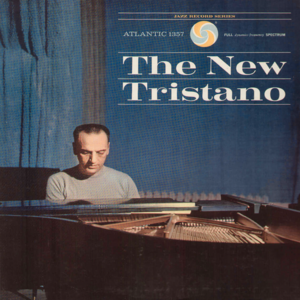
Lennie Tristano - IntuitionIn the late 40s and 50s, Jazz was going through a bit of an identity crisis. The Big Band Era was over and Bebop hadn’t caught on in the mainstream despite the best efforts of Dizzy Gillespie. Older musicians seemed conflicted as to what to make of it. Louis Armstrong famously called out Dizzy at the Hollywood Bowl, and it was common among the Beboppers to refer to the previous generations as “moldy figs”…out of touch, out of fashion.

Cool Jazz Enters

But 1949 saw the emergence of a new style of Jazz – an art-conscious but highly listenable style, embracing subtlety, grace and an almost Classical intellectualness. It came to be known as Cool Jazz, for the record Birth of the Cool, released by Miles Davis in 1951. This is a landmark in and of itself, but as with most landmarks, it served primarily to expose this new genre and all its many players to a wider group of listeners.

A major player in this “new” style was Lennie Tristano and his various ensembles made up of his students. Their Jazz was a highly technical, very cerebral brand, loaded with intricate harmonies and surprising melodies. In the 50s, he garnered a small but loyal following, but then receded into the background as Hard Bop and Miles’ further experiments retook mainstream audiences. Today, with giants like Mark Turner, reinvigorating the sound, Tristano and his students are seeing a resurgence of popularity.

Lee Konitz

Alto saxophonist Lee Konitz is one of the greats of this period of Jazz (and has had an interesting career beyond Cool as well). While I wont claim to be an expert in all things Cool, he clearly understood the teachings of Tristano, as his improvisations contained much of the same precision, harmonic surprise and rhythmic character. Another frequent practice of Tristano’s was the use of contrafact – a new melody written to famous chord changes. Think “Donna Lee” and “Ko Ko”, which were new heads to “Indiana” and “Cherokee” respectively.

“Subconscious Lee” is a Konitz contrafact based on the changes to “What Is This Thing Called Love?”, a classic 1929 Cole Porter tune. The head is complex and really showcases the sonorities Tristano’s students were exploring – mostly “modern” colors on conventional chords, like maj 7′s on minor chords, #11′s on Majors, melodic minor modes…etc. Its also a highly rhythmic head with several displacements and an emphasis on jarring syncopations. Check out the last [A] (bars 25 to 32) of the head to get the full effect. And dig those #5′s on the last chord!

The Solo

On all these early recordings, the solos are short and loaded with ideas. Lee’s solo is precise and unadorned, but rhythmically and harmonically very sophisticated. For me, there are really 3 standout elements:

  1. The prominent use of Diminished Scale-like ideas
  2. That super-cool sequence kicking off the second [A] (bars 102 to 104)
  3. The rhythmic idea in bars 121 and 122

First up, the diminished ideas. Full disclosure…there’s never a “perfect” moment when the whole scale is fully spelled out, so it’s hard to be sure exactly what Konitz was hearing/thinking, but there’s enough of the scale there to make some assumptions. He really leans on the b9 and #9 and the line starting at m. 101 gives that #11 flavor. Notice how his usage tends to ignore the ii-7b5 chords? It seems to me that he’s reducing ii-Vs to just Vs, giving him longer time to sound that altered V color.

Next up…the sequence. Go dig bars 102 to 104. Meditate on the hipness. I don’t think I need to tell you any more about it. Om…om…om…

Ok…so I’ll say one thing…does this remind you of the 90s fusion tenor players (Brecker, Mintzer, Berg…etc.)? This is one of those perfect sequences where the idea is note-for-note transposed. The first bar treats the ii chord as a Major or maybe a Dominant chord, second bar is a tritone sub, and the third is warped a bit to fit the minor chord. Ok…now go back to digging!!!

The rhythmic idea in 121 and 122 does this great job of representing the character of Lee’s 50s phrasing. Precise. Energetic. Driving.

Posted in Jazz, Practicing, Transcription | 1 Comment

A Few More Limbs

Supercollider / The Butcher EPRadiohead gave a treat to fans today. If you purchased a copy of The King of Limbs through the King of Limbs website, there are now two tracks for free download on an EP called Supercollider / The Butcher.

Radiohead called this a thank you to the fans in an email sent out by W.A.S.T.E. today. As a close friend of mine said today, “finally a benefit for paying 56% more for wav files than a CD”.

Supercollider (3/5)

A droning piece with a lot of synth textures and a drifting melody. It has a pervasive Eraser feel to it, reminding me a lot of tracks like “The Clock” and “The Eraser”. The bass recalls “The Gloaming” from Hail to the Thief – which was never a favorite of mine. I like this track better, but it does feel monotonous. It desperately needs a Thom Yorke gut-wrenching bridge a la “Reckoner” from In Rainbows. In state, its interesting, but not much more.

The Butcher (4/5)

A morbid, percussive feature with a very interesting sound treatment done to the drums. There are elements that recall the brooding “Climbing the Walls” from OK Computer, but its sparseness clearly fits the new Radiohead sound present on The King of Limbs. I have to say, its nice to hear Phil Selway cutting loose a bit more on this track. And check it out – there’s a bridge on this one!

Posted in Music, News | Leave a comment

Live Concert Sharing

Dime-a-dozenI’m a huge fan of live jazz. You really can’t understand the experience of jazz improvisation without witnessing it live for yourself. Even many, if not most, studio recordings are polished to the point where the essence of live is missing. While the studio creates a valuable document, the performance is where you really get to tap into that elusive thing that gives jazz is uniqueness.

Since my kiddos came along, I don’t get out as much as I’d prefer. So I’ve substituted an obsession with collecting significant recordings of live shows by players I admire. Through this, I’ve found Michael Brecker solo concerts, rare Ornette Coleman performances and obscure tunes played by heavy weights. Where did I locate these, you might ask?

Live Concert Recording Resources

I use Dimeadozen.org to track down live shows. There’s a nice community of jazz enthusiasts and a wealth of shows up for trade – as I write this, I’m downloading a Don Grolnick concert from 1984! They trade via BitTorrent which often associates with less reputable sites (like PirateBay and the like…), but isn’t inherently illegal. Their policies try to safe-gaurd artists’ rights while still making shows for music fans attainable.

Are there drawbacks? There are a few potential issues I’m aware of. Dime has taken efforts to be *legal*, but they really exist in a gray area. In many ways, these files are typically performances of copyrighted material which, recorded or not, are bound by those conventions. Venues pay royalties (like BMI fees) to allow this material to be performed, so these concerts should be covered under that, but shows aren’t usually intended to be fan-documented and then traded. Dime does this service for free though, so the “harm” is really only theoretical. Some artists don’t like the idea of their live material being traded. Others could care less. But at least Dime can say they’re not robbing artists of profit.

Another potential pit-fall…you could theoretically download corrupted or virus-laden material. Dime does a pretty good job restricting this sort of thing via its method of signing up – only a very limited number of users get to be involved. And the moderators and community likely come down hard on offenders. I’ve been acquiring live shows for years through this source and have never even had a poor transfer, much less a corrupted file.

Last thing…which is only a problem if you’re not a member. Its hard to get an user account. They have a strict cap of users, which have to be active or their accounts are closed. You have to wait until someone is booted to get one. I imagine open slots are getting progressively more rare. All I can say is keep refreshing your browser. They once said to me in an email that they purge accounts every 10 minutes, so you’ll eventually get the sign-up screen.

Software? My favorite BitTorrent client is Transmission for Mac. Its very reliable, super easy to use, and a very tiny program so you wont get all cluttered up. Installation took all of 30 seconds…mostly spent on finding the website.

Then all you do is find a show you want via the Browse or Search options. Click the underlined link at the top of the show’s page to get the tracker file (which tells Transmission or the like where to connect and draw from) and add it to your client.

A few matters of etiquette

  • Dime is a community of people sharing shows. Don’t grab and go. If you download a show, stick around after you get it (by leaving your client open) until people have had a chance to share from you. I try to share at least a full copy back into the pool before I close a “seed”.
  • Dime requires you have a share ratio of at least .25. That’s 25% shared back into the system. My advice? Make your first download something active (this is easy if you get something recently posted from the Browse list), and leave it up awhile…like days. You’ll get a really positive ratio and not have to stress about getting cut off.
  • Be nice. These shows were recorded by people taking a degree of risk and are shared out of their kindness and fan enthusiasm. Bare minimum, take a moment to thank them on the forums. And honor any reasonable requests in the listing (usually, don’t convert to a lossy format like mp3 and re-share, and don’t resell for profit). The community works very much on an honor system.

Good luck…hope you find something good. If you do, come back and tell me about it!

Posted in Jazz, Music | Leave a comment

Michael Brecker & Bob Mintzer play “Giant Steps”

Bob Mintzer's Twin TenorsI’m in the weeds right now, so here’s an oldie! I picked this solo back at NAU in 2000. It comes from Bob Mintzer’s tribute record to the Tenor Sax, Twin Tenors. This is a killer 90s record that showcases Mintzer performing some of his most creative solos. And to add to the treat, he’s being backed by Don Grolnick, Michael Formanek and Peter Erskine with Michael Brecker as a guest soloist on a few tracks (two of which I’ve picked and plan to post). Unfortunately, I think its out of print now, but hey, this is the age of the internet…I’m sure you know what to do about it.

“Giant Steps” is often built up as one of those looming hurdles in the development of a jazz musician that everyone must eventually clear. It was always getting called at the jam sessions – usually as a joke or a dare. It has challenging changes built of chords moving in 3rds and 4ths while the keys descend in Major 3rds. And those key changes happen on beat 3, rather than on any rhythmic landmarks. The melody is odd and intervallic, and while simple, is not particularly catchy except to the legions of jazzers who’ve dutifully committed it to memory. And to top it off, it usually moves at ludicrous speed when performed. Really, its a very odd duck. But despite this, John Coltrane’s tune has become a test of a modern player’s mettle…for better or for worse.

It comes as no surprise then that Mintzer, looking to pay homage to the legacy of the Tenor Sax, included this tune not once but twice on Twin Tenors. I’ve transcribed “Version 1″ which features a blazing, pattern-oriented solo by Michael Brecker bearing a strong resemblance to the original Coltrane performance, and a more abstract, highly rhythmic solo by Bob Mintzer that demonstrates a more conceptual approach to the tune. The contrast between the two interpretations is really remarkable.

Comparing Notes

Michael Brecker’s solo is built from the same “digital patterns” found all over Coltrane’s solo. The 1-2-3-5 pattern is here. 5-3-1-5 is here. Lots of fragments of the bebop scale show up. And a wide variety of arpeggios and passing bebop vocabulary saturates the rest. Its a remarkable feat of dexterity, even though it stays pretty close to the traditional approach to “Giant Steps” Coltrane gave to us in 1959.

Its also notable that Brecker, who is renowned for his incredible harmonic vocabulary and rich palette of substitutions, keeps it pretty inside. This is a true testament to the difficulty of the song. The only consistent alteration can be seen over the C7 chords, where he is most likely using C Super Locrian (C Db D# E F# G# Bb). This isn’t surprising, as tunes with exotic chords like these often seem muddled when you push the harmonies too far. In fact, a bit of wisdom can be drawn from this – don’t alter alterations! At least, tread lightly.

Altering already-dissonant chords and substitutions can actually reduce tension, weakening the line. In this tune’s case, its more like, altering chords that are already complex makes the line less clear and can fool the listener into hearing the wrong portion of the tune. Notice how close C Super Locrian is to Db Major? Using this sound too much can actually rob your line of the intricacy of the progression.

Here’s a few tips for those trying Brecker or Coltrane’s approach to “Giant Steps”:

  1. Practice 1-2-3-5 patterns and other number-derived ideas. Work a variety of these through the progression until you can switch between them with relative ease. Beware though…this can lead to lots of senseless repetition. You’ll have to maintain focus and not let the tempo take control. And even if you do, this formulaic approach will often come across contrived. Strive for variety and always let your ear and instinct prevail over formulas.
  2. A more free approach to this same concept would be to take the shapes of the idea and practice manipulating it through chords. An example might be the same 1-2-3-5. But now play it from all scale tones, getting used to the subtle change in intervals occurring on each step. Then move according to inspiration rather than simply recreating the exact pattern’s structure on the next chord. So 6-7-8-3 or 3-4-5-7…6-#4-3-2 anyone?

Mintzer’s solo seems to come from a more original place. While still nailing the changes, he spends much of the time abstracting the rhythms of the tune. He almost seems to play like a drummer…percussive rhythms, over-the-bar phrasing and hints of hemiola sneak in throughout.

I love the strength of his themes. Take the opening 4 bars for instance. The quarter-note phrase endings in bars 1, 2 & 4 give a sense that each chunk is part of a bigger idea. Often, on a tune this challenging and this fast, pre-fabricated ideas take over leaving little room for inspiration. Mintzer has avoided that here by using simple ideas that can be easily moved around. And then he executes flawlessly!

One more particularly interesting moment is the second half of chorus O. Notice the pentatonic bit beginning on F∆7 in measure 330? He then begins shifting the idea up more-or-less in half steps to finish out the chorus. This is a great example of letting the idea lead the way. Even when its not completely “inside”, it still comes across because of the strength of the line and the repeated shapes and rhythms.

Closing thoughts

There’s so much great stuff in this one! It was a blast comparing the two different approaches to this tune. And that’s not even counting the incredible Don Gronick piano solo that I didn’t pick here. Hopefully this gives you some new insights into how to attack this beast.

Happy shedding!

Posted in Jazz, Practicing, Transcription | 2 Comments